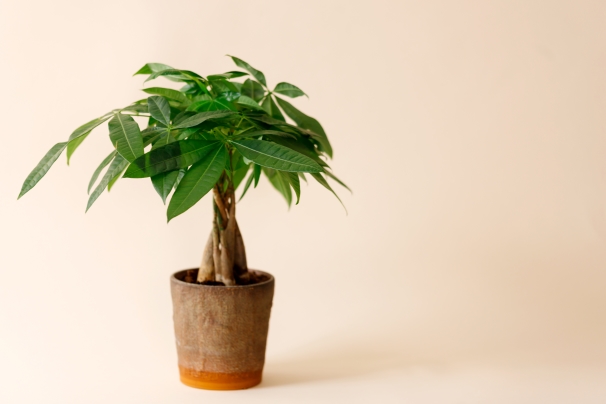
“Money tree” is the common name for Pachira aquatica—a tropical plant that’s often grown indoors with a braided trunk and a promise of good luck. Whether it brings you extra cash is up for debate, but with the right care it can grow into a healthy, long-lived indoor tree.
A money tree doesn’t grow dollar bills—but good care can definitely keep you from wasting money replacing sick plants.
This guide walks through light, water, soil, pruning, and common problems so your money tree stays happy instead of crispy or droopy.
Quick care checklist
If you remember nothing else, remember this:
- Light: Bright, indirect light; avoid harsh midday sun right against a window.
- Water: Let the top 1–2 inches of soil dry out before watering again.
- Soil: Loose, well-draining potting mix in a pot with drainage holes.
- Humidity: Prefers moderate to high humidity—especially in winter.
- Temperature: Room temperature (65–80°F) with no cold drafts.
- Fertilizer: Light feeding during spring and summer only.
The rest of this article fills in the details.
1. Light: Bright but not scorching
Money trees are native to warm, bright, river-edge environments. Indoors, they usually do best with:
- Bright, indirect light near an east or north window
- Filtered light a few feet back from a sunny south or west window
Signs the light is off:
- Too little light: Long, stretched stems, small new leaves, slow growth.
- Too much direct sun: Brown, crispy patches on leaves, especially on the side facing the window.
If yours looks leggy, move it closer to a window over a couple of weeks. If leaves are scorching, pull it back or add a sheer curtain to soften the light.
2. Water: Avoid the “constant soggy” trap
Overwatering is the fastest way to kill a money tree.
A simple rule:
- Water thoroughly only when the top 1–2 inches of soil are dry to the touch.
How to do it:
- Stick a finger into the soil up to your first knuckle.
- If it feels dry, water slowly until excess drains from the bottom.
- Empty the saucer after 10–15 minutes so the plant isn’t sitting in water.
Warning signs:
- Overwatered: Yellowing leaves, mushy stems, sour smell from the soil.
- Underwatered: Dry, crispy leaf edges and drooping stems, but soil is bone dry and light.
If you’ve been overwatering, let the soil dry more deeply and check that the pot drains freely.
3. Soil and pot: Think “loose and breathable”
Money trees don’t like heavy, compacted soil around their roots.
Good options:
- General indoor potting mix lightened with a bit of perlite or bark, or
- A mix labeled for “indoor trees” or “tropical houseplants” that drains well.
Make sure the pot:
- Has drainage holes
- Is only 1–2 inches wider than the root ball when you repot
- Isn’t wrapped in a decorative outer pot that holds standing water at the bottom
If the soil stays wet for days or smells sour, it’s a sign your mix or pot is holding too much moisture.
4. Temperature and humidity
Money trees are happiest in:
- 65–80°F (18–27°C)
- Away from cold drafts, AC vents, or heaters that blow directly on the plant
They also appreciate moderate to high humidity, especially in winter when indoor air is dry.
Easy ways to help:
- Place the pot on a tray of pebbles with water below the pebble line (for gentle humidity, not direct soaking).
- Group it with other plants to create a slightly more humid micro-climate.
- Avoid putting it right next to a heat register or in the path of a strong fan.
5. Fertilizing: Light and seasonal
Money trees don’t need heavy feeding. During the growing season:
- Use a balanced, water-soluble houseplant fertilizer at half strength
- Apply about once a month from spring through early fall
- Skip fertilizing entirely in late fall and winter when growth naturally slows
If leaves are pale or growth is weak despite good light and watering, a mild fertilizer plan can help. More isn’t better—too much fertilizer can burn roots and leaves.
6. Pruning and shaping
Pruning keeps a money tree compact and encourages fuller growth.
Basic tips:
- Use clean, sharp scissors or pruners.
- Cut just above a leaf node (where leaves attach to the stem).
- Remove dead, yellow, or damaged leaves as you notice them.
If the plant is getting too tall:
- You can cut back leggy stems to the height you want—new growth often sprouts from lower nodes.
- Rotate the pot a quarter turn every week or two so it grows evenly toward the light.
Braided money trees will slowly thicken over time. Avoid trying to braid very stiff, older stems—only flexible, young stems can be safely shaped.
7. Repotting: When and how often
Most indoor money trees only need repotting every 2–3 years.
Signs it’s time:
- Roots circling the inside of the pot or growing out of the drainage holes
- Water running straight through without soaking in
- Soil breaking down into a dense, compact mass
How to repot:
- Choose a pot 1–2 inches wider with drainage holes.
- Gently loosen some of the outer roots without tearing the root ball apart.
- Place in fresh, well-draining mix at the same depth it was growing before.
- Water thoroughly and keep in bright, indirect light while it recovers.
Avoid jumping to a much larger pot—that often leads to soggy soil and root rot.
8. Common problems and what they mean
Yellow leaves
- Often from overwatering or poor drainage.
- Check the soil moisture and make sure the pot drains freely.
Brown, crispy edges
- Usually underwatering, very dry air, or too much direct sun.
- Adjust watering, move slightly out of the harshest light, and improve humidity.
Drooping leaves
- Can be either thirst or waterlogged roots.
- Feel the soil: dry means water; soggy means let it dry and check drainage.
Leaf drop after bringing it home
- Common “move shock” when a plant goes from greenhouse/store conditions to a new home.
- Try not to move it repeatedly; give it a few weeks of consistent care.
9. Can you plant a money tree outside?
In most of North America, money trees are grown as indoor houseplants only. They’re tropical and can’t handle freezing temperatures.
If you’re interested in planting a hardy outdoor tree for shade or long-term structure in your yard, that’s a different project entirely—you’ll want to look at species suited to your climate and the best time of year to plant trees in Colorado or your region’s equivalent timing.
Final thoughts
Money trees don’t actually grow cash, but they’re forgiving, attractive plants when you match them with:
- Bright, indirect light
- Sensible watering (not too much, not too little)
- A breathable, well-draining pot
- Occasional pruning and a little patience
Treat yours like a small tropical tree rather than a disposable decoration, and it can become a long-term part of your indoor “forest.”