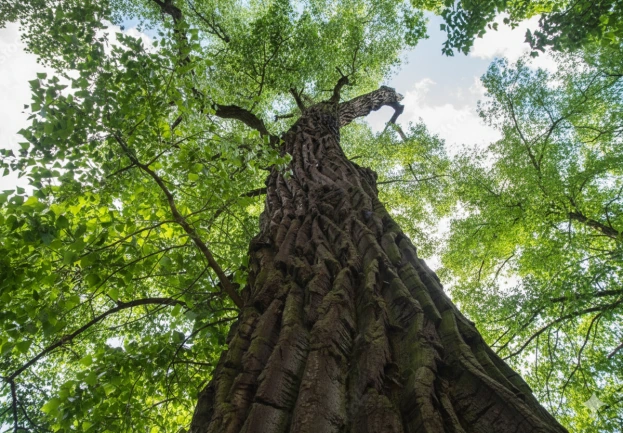
Trees don’t go on walks, swipe right, or fly across town to find a partner—but they do have a lot of help when it comes to reproducing.
From wind and insects to birds, squirrels, and even fungi in the soil, trees rely on the world around them to move pollen and seeds. Understanding how that works makes it easier to care for the trees in your own yard.
“Every mature tree is proof that countless tiny things went right—one grain of pollen, one falling seed, one good spot to grow.”
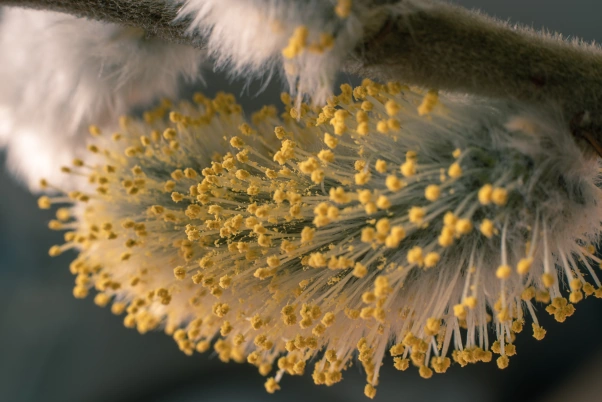
The same powdery pollen that makes many people sneeze is exactly what trees use to make new life.
When pollen lands in the right spot, it fertilizes an ovule and starts the process of forming a seed. That seed is essentially a tiny tree-in-waiting, packaged with some stored food and a protective coat. If it lands in the right place with enough light, space, and moisture, it can grow into the next generation.
Some species carry both male and female parts on the same tree, while others need a separate “partner” tree nearby. In every case, though, trees need help getting pollen and seeds from Point A to Point B—which is where their “friends” come in.
Many trees let the wind do the work.
Species like cottonwoods, aspens, and many pines release huge amounts of light, dusty pollen into the air. Each grain is tiny and weightless so it can drift on a breeze until it lands on a compatible flower or cone.
You’ll notice wind-pollinated trees when:
Wind-pollinated trees don’t aim for precision. They send out a massive cloud of pollen and count on probability to do the rest.
Other trees depend on insects to move pollen.
Bees, butterflies, moths, beetles, and other insects visit blossoms looking for nectar and pollen as food. As they move from flower to flower, they accidentally carry pollen with them.
Common insect-pollinated trees include:
These trees often have:
When we support pollinators, we’re also supporting healthy tree reproduction.
Once seeds are formed, trees face a new challenge: getting those seeds away from the parent tree so they have room and resources to grow.
Wildlife helps with that:
It’s a win-win: animals get food, and trees get free transportation for the next generation.
Some of a tree’s most important helpers live underground.
Microscopic mycorrhizal fungi connect to tree roots, forming a partnership where:
Healthy soil life doesn’t move pollen, but it dramatically improves the chances that young trees will survive those first critical years.
Knowing how trees reproduce can help you make better choices on your property:
When your landscape supports pollinators, wildlife, and healthy soil, you’re also helping your trees complete their life cycle.
Sometimes tree reproduction creates real-world problems—like heavy seed crops, brittle branches, or unwanted volunteer seedlings popping up in the wrong place.
That’s when it helps to bring in a local tree service or certified arborist who understands how to balance safety, aesthetics, and long-term tree health. They can:
Trees may be rooted in place, but they’re not alone. With help from wind, wildlife, fungi, and a bit of smart human care, they keep our neighborhoods cool, beautiful, and full of life—generation after generation.